
Call us now :08045803029
 Send Inquiry
 Send Inquiry
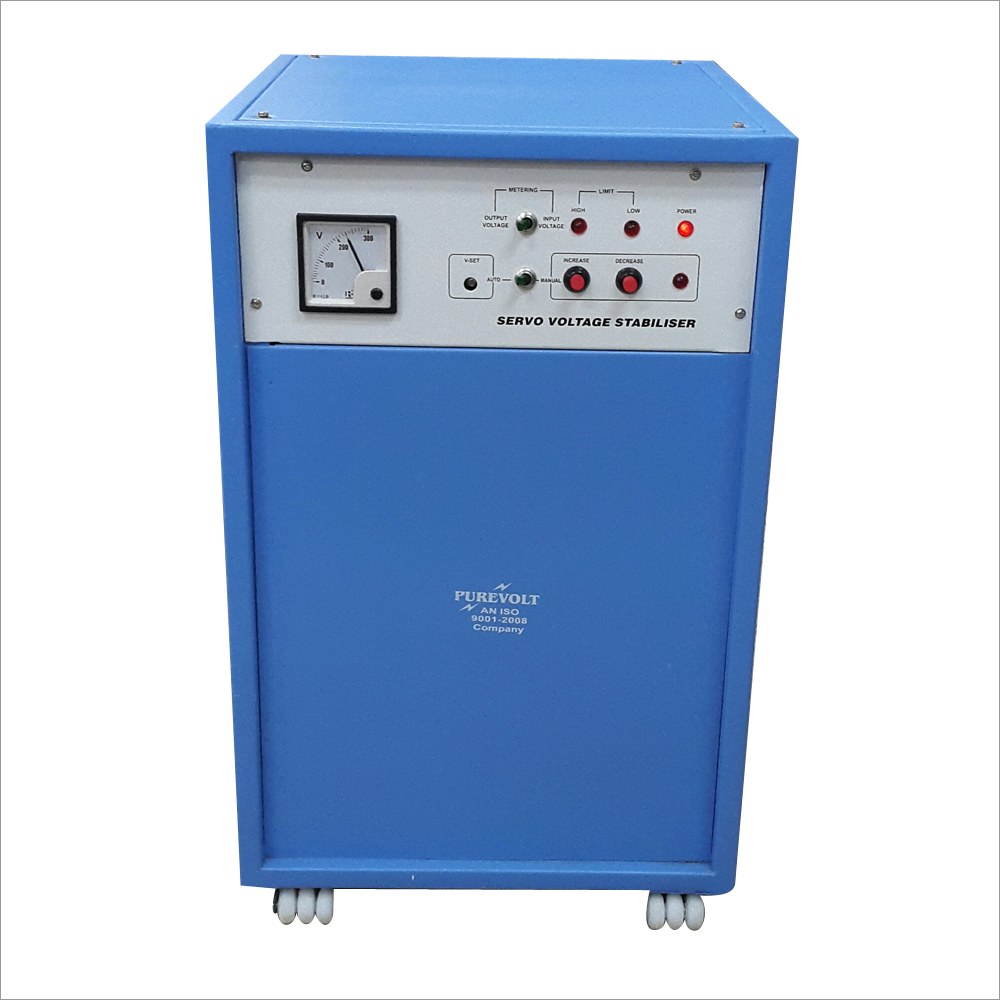
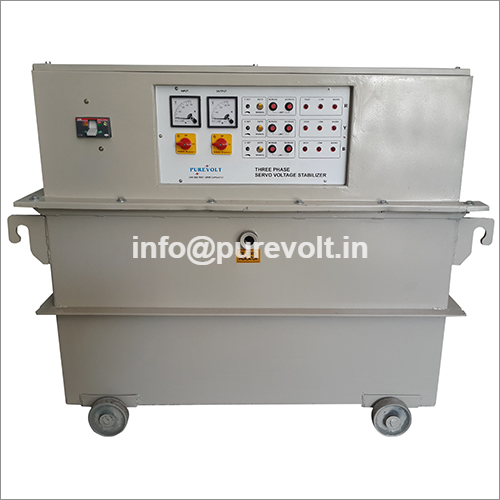
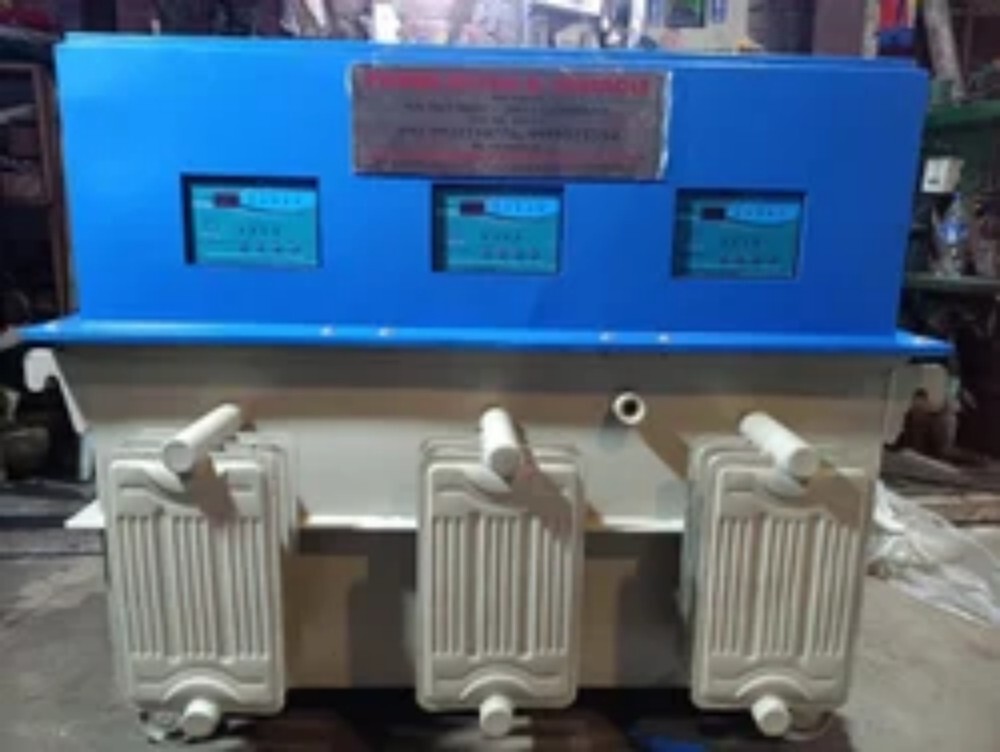
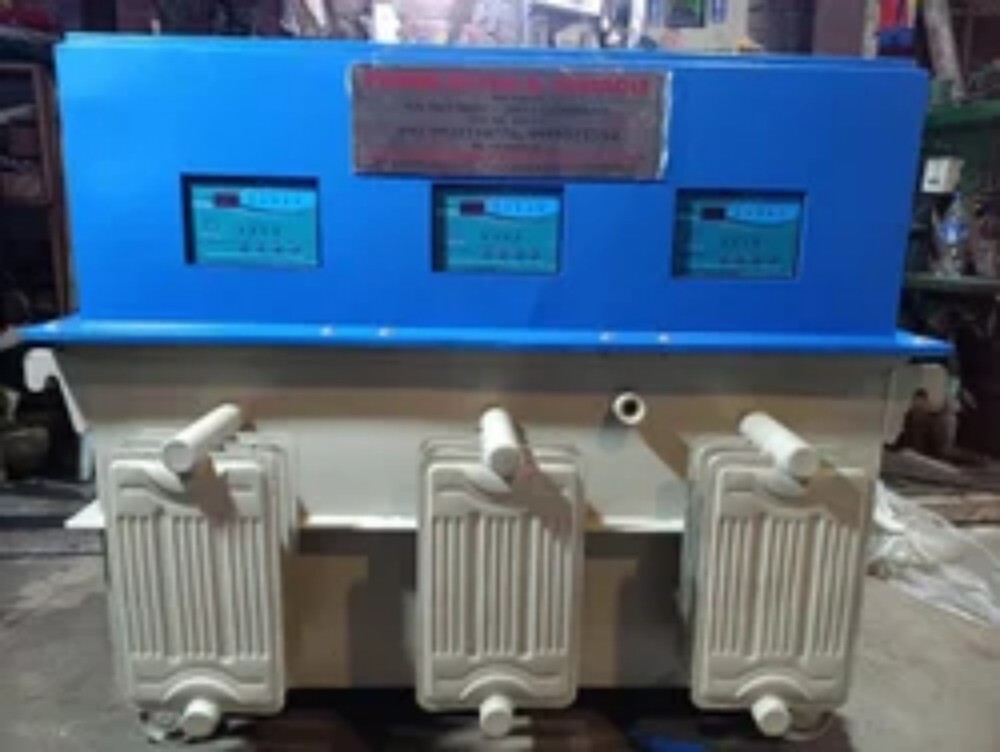
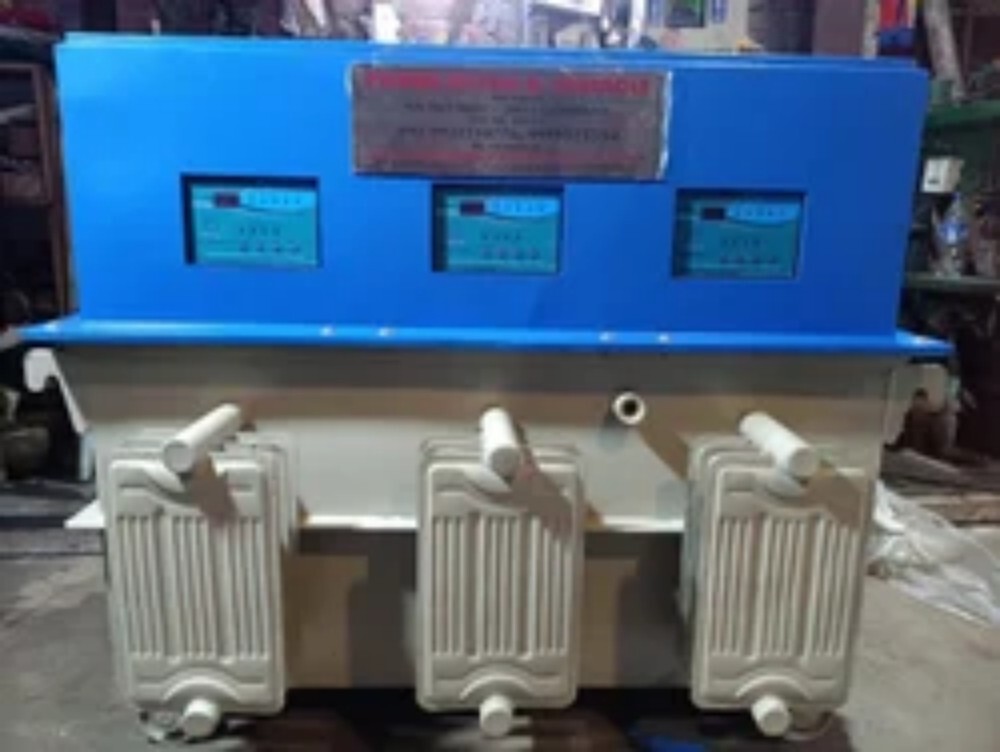
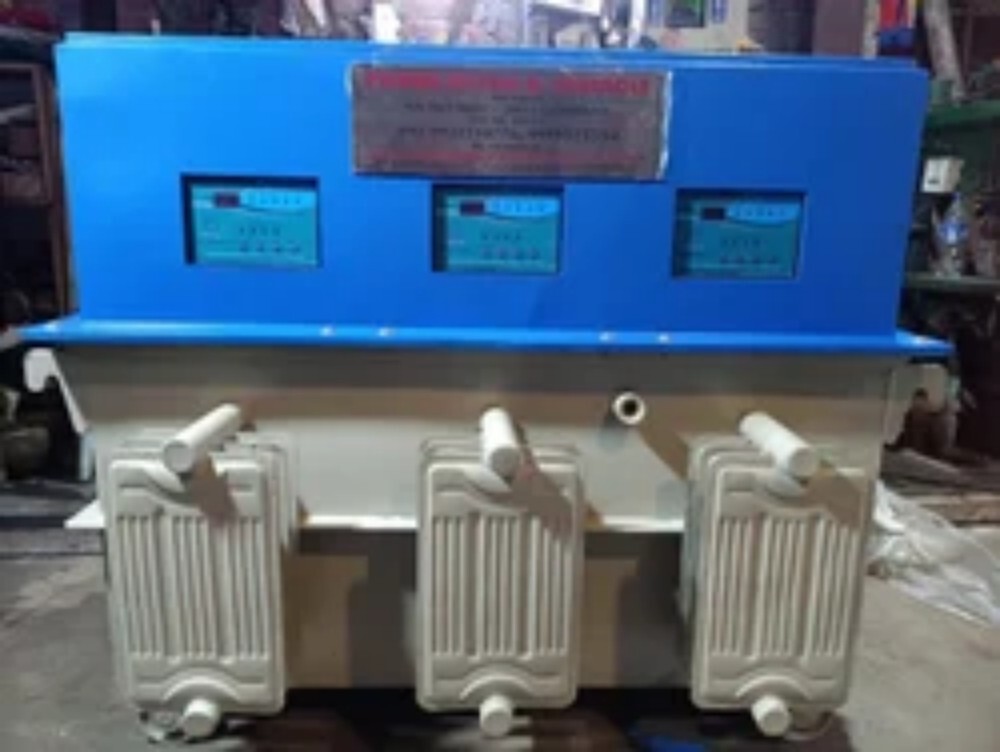
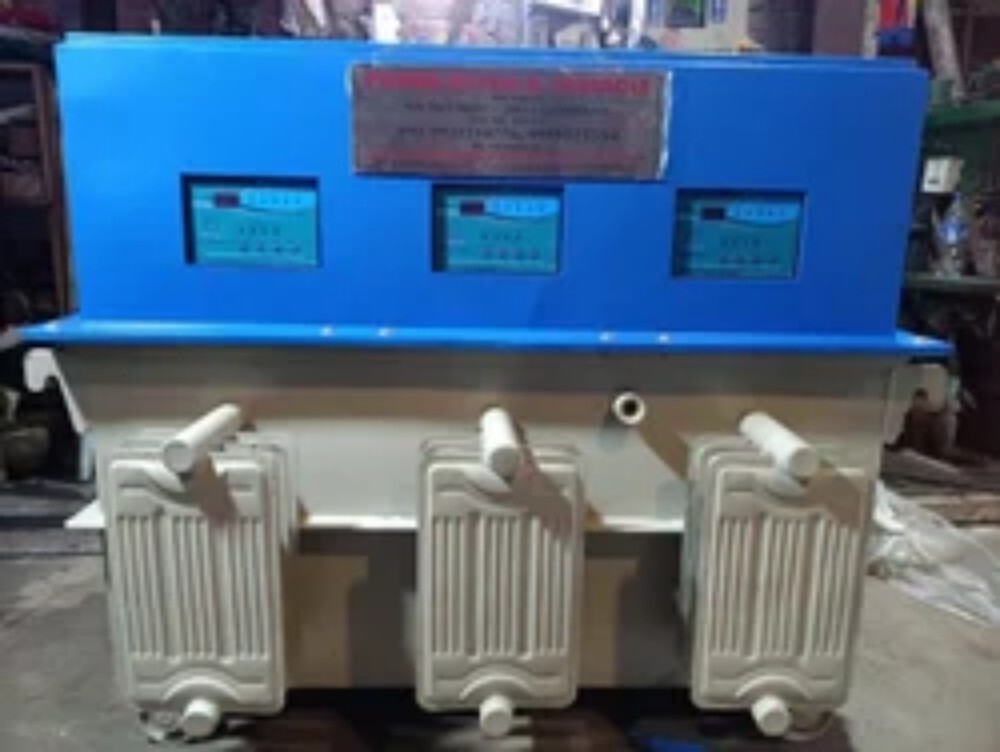
Servo Stabilizer
Price 30000.0 INR/ Piece
MOQ : 1 Piece
Servo Stabilizer Specification
- Power Rating
- required based
- Input Voltage
- 300 - 460 Volt (V)
- Output Voltage
- 400 Volt (V)
- Efficiency
- required based
- Frequency (MHz)
- required based Hertz (HZ)
- Warranty
- 12 MONTHS
- Rated Voltage
- required based Volt (V)
- Usage & Applications
- required based
- Weight
- required based Kilograms (kg)
- Operating Temperature
- required based Celsius (oC)
- Cable Type
- required based
- Ambient Temperature
- required based Celsius (oC)
- Display Type
- required based
- Phase
- required based
- Features
- required based
- Material
- required based
- Frequency
- required based Hertz (HZ)
- Conductor
- required based
- Control System
- required based
- Rated Current
- required based Ampere (amp)
- Usage
- SVC
- Insulation Resistance
- required based
- Design
- required based
- Voltage Protection
- required based
- Display
- Analog
- Dimension (L*W*H)
- required based Centimeter (cm)
- Rated Power
- required based
- Current Type
- AC
- Waveform Distortion
- required based
- Product Type
- Stabilizer
Servo Stabilizer Trade Information
- Minimum Order Quantity
- 1 Piece
- FOB Port
- Delhi
- Payment Terms
- Telegraphic Transfer (T/T)
- Supply Ability
- 50 Pieces Per Week
- Delivery Time
- 7 Days
- Sample Available
- No
- Sample Policy
- Contact us for information regarding our sample policy
- Packaging Details
- As per Customer Requirements
- Main Export Market(s)
- Asia, Australia, South America, Middle East, Africa
- Main Domestic Market
- All India
- Certifications
- ISO 9001-2015, Tested by NABL Approved Lab, D&B
About Servo Stabilizer
Purevolt is Exporter and Manufacturer of Servo Stabilizers located at Okhla Industrial Area, New Delhi, India. We had exported our products to over 30 Countries. These Servo Stabilizer are made in 1 Phase and 3 Phase designs. We provide total customizations as per requirements of client to suit their prevailing site conditions. We have resellers and distributors in many countries. We also provide PAN India supply through our Dealers in India.
Purevolt Products Pvt Ltd is a big name which deals in the manufacturing, supplying and exporting of best in class Servo Stabilizer which is commonly used in medium to large scale industries for the conversion of bad signals with fluctuations and ripples into streamlined ones for the safety of the machineries. The external casing of this machine is fabricated by using best in class materials which imparts greater strength and sturdiness. Buyers can get this top quality Servo Stabilizer from us with a supply ability of 100 units per week.
Rating Available : 1 KVA to 2000 KVA
Export : Exported to Over 30 Countries.
Type : 1 phase and 3 Phase, Unbalanced Type
Experience : Since 1994, Over 25 Years of Experience.
Certifications : ISO 9001-2015, Tested by NABL Approved Lab, D and B accredited.
Location : Okhla Industrial Area, Phase-1, New Delhi
Advanced Voltage Protection for Sensitive Equipment
Our servo stabilizer ensures your equipment operates safely within the required voltage range by regulating input fluctuations from 300V to 460V and delivering a precise 400V output. The integrated protection features minimize equipment wear and reduce the risk of costly downtime or damage, making this solution ideal for environments with unstable power supply.
Customizable Design to Suit Your Needs
Every installation is different; thats why our servo stabilizer supports configurations tailored to your unique requirements, such as phase options, rated voltage, power rating, and specific environmental tolerances. This flexibility enables optimal performance across a wide range of industries and operational settings in India.
FAQs of Servo Stabilizer:
Q: How does a servo stabilizer benefit my electrical equipment?
A: A servo stabilizer actively maintains a constant output voltage of 400V by correcting input voltage fluctuations within a 300V to 460V range. This protects your equipment from overvoltage, undervoltage, and other electrical disturbances, thereby extending the operational life and improving efficiency.Q: What are the key features available for this servo stabilizer?
A: The servo stabilizer offers essential features based on your requirements, including phase selection, rated voltage, voltage protection, analog display, advanced control systems, proper insulation resistance, and flexible design dimensions to match your specific application needs.Q: When should I consider installing a servo stabilizer in my facility?
A: You should consider using a servo stabilizer whenever you operate sensitive or critical equipment in environments prone to voltage fluctuations or unpredictable power supply. Early installation ensures uninterrupted operation and minimizes the risk of equipment failure.Q: Where can I purchase or get support for this servo stabilizer in India?
A: Our servo stabilizer is available through multiple business channels such as distributors, manufacturers, exporters, suppliers, service providers, and wholesalers across India. Comprehensive support and service ensure your product operates reliably throughout its lifecycle.Q: What is the standard warranty period and what does it cover?
A: This servo stabilizer comes with a 12-month warranty covering manufacturing defects and performance issues under normal operating conditions. Please consult the warranty terms for detailed coverage and how to access support services.Q: What process is used for installation and setup?
A: The installation process is handled by qualified technicians and includes initial assessment of required specifications, configuring the stabilizer for phase, voltage, and power rating needs, followed by system testing to ensure proper functionality before commissioning.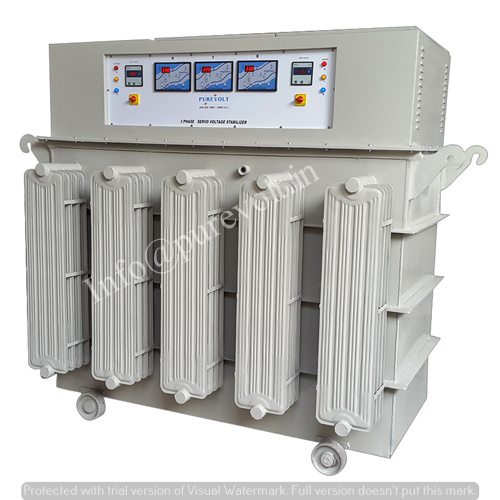
Tell us about your requirement

Price:
Quantity
Select Unit
- 50
- 100
- 200
- 250
- 500
- 1000+
Additional detail
Mobile number
Email

More Products in Voltage Stabilizers Category
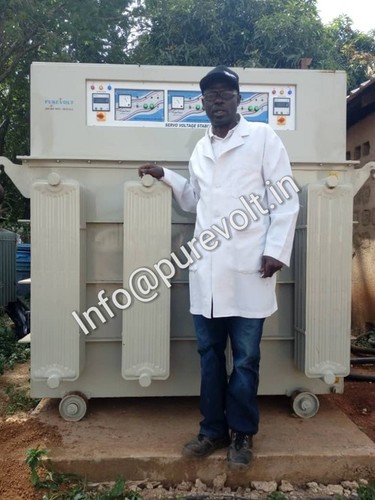
Servo Voltage Stabilizer
Price 135000.0 INR / Piece
Minimum Order Quantity : 1 Piece
Frequency (MHz) : required based Hertz (HZ)
Product Type : Stabilizer
Display : Analog
Input Voltage : required based Ampere (A)
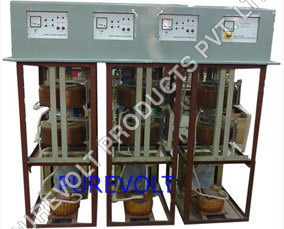
Oil Cooled Servo Voltage Stabilizer
Price 180000 INR / Piece
Minimum Order Quantity : 1 Piece
Frequency (MHz) : 5060 Hertz (HZ)
Product Type : Oil Cooled Servo Voltage Stabilizer
Display : Analog
Input Voltage : 340460 V
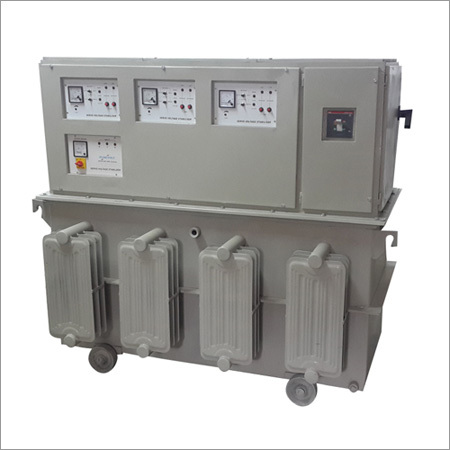
Three Phase Voltage Stabilizer
Price 145000 INR / Piece
Minimum Order Quantity : 1 Piece
Frequency (MHz) : 50 Hertz (HZ)
Product Type : Three Phase Voltage Stabilizer
Display : Analog
Input Voltage : 340470 V
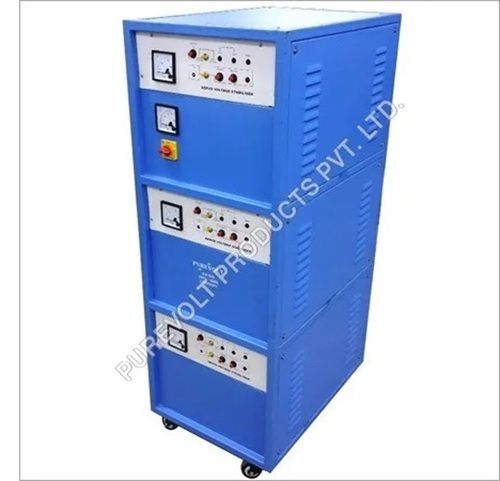
Three Phase Air Cooled Servo Voltage Stabilizer
Price 30000.0 INR / Piece
Minimum Order Quantity : 1 Piece
Frequency (MHz) : 50 Hertz (HZ)
Product Type : Servo Voltage Stabilizer
Display : Meter
Input Voltage : 300 460 Volt (V)

We are catering to top Indian cities such as New Delhi/NCR, Noida, Faridabad, Ghaziabad, Greater Noida, Alwar, Manesar.
 Send Inquiry


Our Products


D-9/6, Okhla Industrial Area, Phase-I, New Delhi - 110020, India

Mr Sumit Gupta
(Director)
Mobile :08045803029
 Send Inquiry
 Send SMS
 Call Me Free
Developed and Managed by Infocom Network Private Limited.
 English
 Spanish
 French
 German
 Italian
 Chinese (Simplified)
 Japanese
 Korean
 Arabic
 Portuguese